
A luxury home can have carefully selected marble floors, intentional spacing, a large compound, well-fitting fixtures, natural lighting and a well-designed exterior, yet its roof is often treated as a separate construction decision, as most homeowners choose a roofing material for its appearance and protection, then consider electricity generation later, after the building has been completed. This can mean installing conventional solar panels on top of a finished roof, even when an integrated option could have been considered during the original design.
For homeowners building off-grid residences in Nigeria, solar stone-coated roofing offers another roofing option, combining the look of shingle-style stone-coated roofing with solar-generating technology so part of the roof can contribute to the property’s electricity supply. This is a product that is worth considering for new homes, architect-designed residences and residential developments where exterior appearance and energy planning are both important.
However, the roof must suit the architectural design, the solar tiles must be compatible with the intended roof sections, and the electricity system must be planned around the property’s energy requirements. This blog post explains how luxury solar roofing works, what it can offer a premium property, how it compares with conventional rooftop solar panels and what to assess before committing to the investment.

What Is Luxury Solar Roofing?
Luxury solar roofing refers to roofing solutions that combine a premium architectural finish with technology for generating electricity, and the term can describe different products, so it is important to establish what a supplier means when using it.
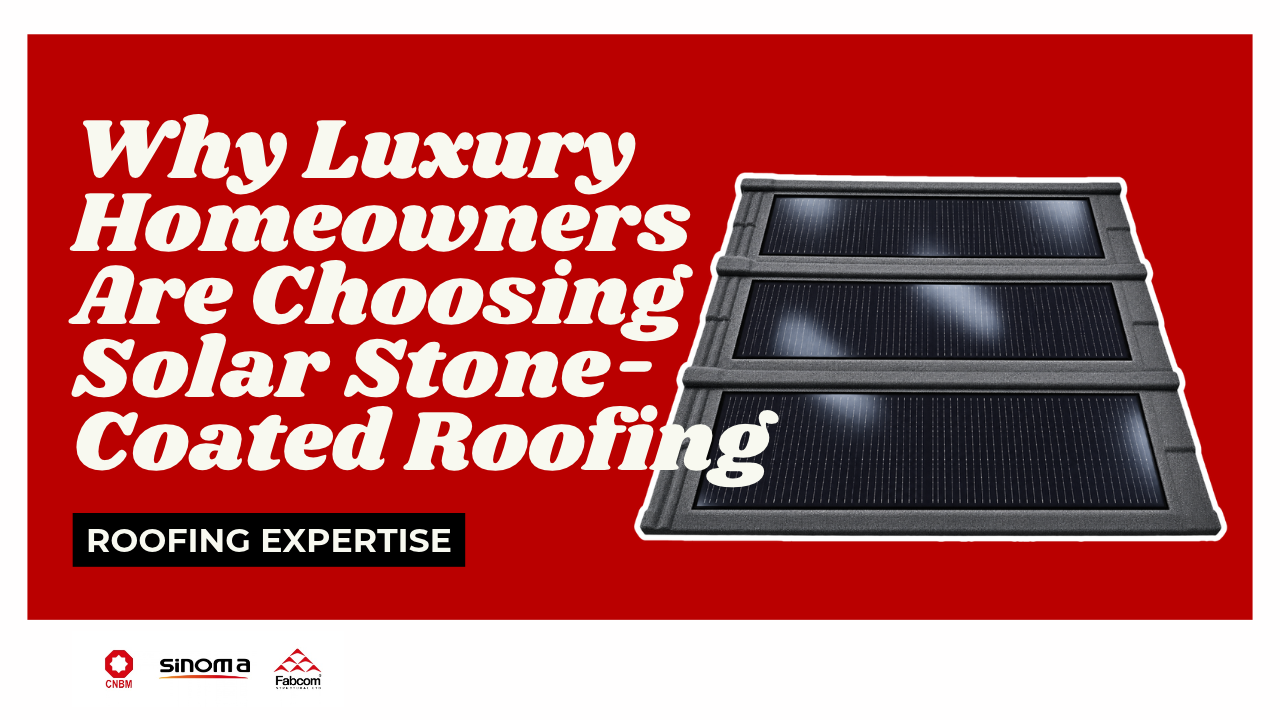
Fabcom Structural’s Solar Stone Coated Roofing is a solar shingle product that integrates solar-generating technology into a shingle-style roofing unit, and it is designed to combine the visual character of stone-coated roofing with the ability to generate electricity. Each Fabcom Structural solar stone-coated roofing tile has a nominal power rating of 80 watts.
This is different from a conventional solar installation, where separate solar panels are mounted above the roofing material and with integrated solar roofing, the solar-generating components form part of the roof covering in the areas where the solar tiles are installed.
The distinction matters to homeowners who have invested in a particular architectural style. A roof can occupy a large part of a building’s visible exterior, particularly on a detached house with a pitched roof. The roofing material, colour, profile and finish can influence how the completed property looks from the road and from the garden. Solar technology that forms part of the roofing design gives the architect another option to consider.
Solar stone-coated roofing is especially relevant when the homeowner is still selecting roofing materials. At that stage, the architect and roofing contractor can assess which roof sections are suitable for solar tiles, how the roof will be detailed and how the electrical components will connect to the rest of the system.
Why Are Luxury Homeowners Considering Solar Stone-Coated Roofing?
The roof can contribute to the property’s design
On a premium residence, the roof is part of the architectural composition as its profile and finish affect the overall appearance of the building, particularly where the roof is visible from the entrance, driveway or surrounding properties.
Conventional solar panels can work well on homes, but their appearance and mounting arrangement need to be considered alongside the roof design. Some homeowners are comfortable with visible panels, while others prefer to explore a solution in which the solar-generating component is integrated into the roofing material.
Solar stone-coated roofing offers that alternative on compatible roof sections as it can be considered for contemporary residences, carefully designed family homes and properties where the architect wants the roof to contribute to the finished appearance while also generating electricity.
The result will depend on the roof layout, the selected materials and the quality of the installation. A solar stone-coated roofing product cannot compensate for poor roof design, and it should not be specified without checking its compatibility with the proposed structure.
Energy planning can begin before the house is completed
In Nigeria, many homeowners plan for backup electricity because grid supply alone may not meet their household’s needs, and a premium residence may have air conditioning, refrigeration, water pumps, security equipment, entertainment systems and other electrical loads that require careful planning.
Solar stone-coated roofing allows the project team to consider electricity generation while the roof is being designed, instead of treating the roof and the energy system as unrelated purchases, the architect, roofing contractor and solar installer can assess how the two should work together.
This early planning is very important because the roof’s available area, orientation, shading and layout can influence how much solar-generating capacity can be installed, and the homeowner can also consider inverter capacity and battery storage before electrical work is completed.
For a new build, this can make the overall specification easier to coordinate. It also helps avoid a situation in which the roof is completed before anyone has assessed whether the available space is suitable for the intended solar system.
The property can have a more considered specification
Some buyers often pay attention to details that are not immediately visible in a photograph, and they may want to know which materials have been installed, how the property has been designed for everyday use and whether its systems are appropriate for the household.
Solar stone-coated roofing can form part of that wider specification. It brings roofing and electricity generation into the same design conversation, provided the product is suitable for the building and the system is properly planned.
This does not mean that every premium property needs solar roofing. A homeowner who prioritises the lowest initial roofing cost may reach a different decision from someone building a long-term family residence. The value lies in choosing a solution that suits the property’s design, energy requirements and ownership plans.
How Does Solar Stone-Coated Roofing Work in a Nigerian Home?
Solar stone-coated roofing generates electricity through photovoltaic technology, and the solar-generating tiles receive sunlight and produce direct-current electricity. An inverter converts this electricity into alternating current for compatible household appliances, and where batteries are included, the system can store some of the generated electricity for use later.
The amount of electricity available depends on the installed solar capacity and the conditions under which the system operates. The 80W rating of a Fabcom Structural solar roofing tile describes its nominal power capacity under specified test conditions. It does not mean the tile will continuously produce 80 watts throughout the day.
For example, 25 tiles rated at 80W each would provide a nominal combined capacity of 2,000W, or 2 kW, and the amount of energy generated over a day would depend on the sunlight reaching the tiles, shading, temperature, system losses and other installation conditions. The household’s actual benefit would also depend on when electricity is generated and when it is needed.
This is why a solar stone-coated roofing quotation should not be based on the number of tiles alone, as the complete system needs to be assessed against the property’s energy requirements.
For a large residence, the project team should review the appliances that will operate regularly, their power requirements and how long they are expected to run. Air conditioning and water pumps, for example, can have a substantial effect on system sizing. Battery capacity also matters if the homeowner wants to use stored solar energy during the evening or when grid power is unavailable.
Solar roofing can contribute to a home’s electricity supply, but the level of contribution should be established through proper system design, and if the intention is to power most of the house, the project team should confirm whether the available roof area and compatible solar tiles can provide the required capacity and whether additional solar equipment will be needed.
Solar Stone-Coated Roofing vs Conventional Solar Panels
Both integrated solar roofing and conventional rooftop solar panels can generate electricity. The right option depends on the building, the available roof area, the owner’s priorities and the project budget.
| Consideration | Solar stone-coated roofing | Conventional rooftop solar panels |
|---|---|---|
| Appearance | Solar-generating technology forms part of compatible shingle-style roofing units. | Separate panels are mounted above the existing or planned roof covering. |
| Roof compatibility | Designed for compatible shingle stone-coated roof sections. | Mounting arrangements depend on the roof type and the selected installation system. |
| New construction | Can be considered while selecting roofing materials and planning the roof. | Can be incorporated into the design or installed after the roof is completed. |
| Existing buildings | Requires an assessment of the current roof and compatibility before installation. | May be suitable where the roof structure, condition and mounting arrangement support the installation. |
| Electricity generation | Depends on the number and performance of the solar tiles and the complete system design. | Depends on the number, rating and performance of the solar panels and the complete system design. |
| Budget | Requires a quotation covering the roofing arrangement and associated solar equipment. | Requires a quotation covering the panels, mounting equipment and associated electrical components. |
Neither option is automatically better for every home as conventional panels may be suitable where the roof is already complete, and the homeowner wants to add solar generation without replacing the roofing material. Integrated solar roofing may be worth evaluating where a new roof is being specified and the owner wants solar generation incorporated into the design.
A fair comparison should consider the complete installed cost, the expected electricity output, the roof’s remaining service life, maintenance arrangements and the equipment required to use the electricity. Comparing the price of solar roofing tiles with the price of conventional panels alone will not provide a reliable picture of the overall investment.

What Should You Check Before Choosing Premium Solar Roofing?
A premium roofing decision involves several people, including the homeowner, architect, quantity surveyor, roofing contractor and solar installer. The following process helps bring the main decisions together before the project reaches the installation stage.
1. Confirm that the product suits the architectural design
Identify the roof sections where solar stone-coated tiles could be used and confirm that those sections are compatible with the product. This is particularly important because Fabcom Structural solar stone-coated roofing is designed for compatible shingle stone-coated roof areas, so do not be assumed that the tiles can replace every roofing profile on the building.
2. Assess the roof’s solar potential
The available roof area is only one part of the calculation, as the team should assess which areas receive useful sunlight and whether nearby buildings, trees, roof features or other obstructions may create shading.
Roof orientation and the angle of the roof can also affect solar performance, which is why we recommend that the project team use the actual building layout and local solar conditions to estimate expected generation rather than relying on a general figure for every property.
For a development with several houses, each building may require its own assessment. Similar-looking properties can have different shading conditions depending on their position within the estate.
3. Establish the household’s electricity requirements
List the appliances and equipment that the homeowner expects to run, include their power ratings where available, how many hours they may operate and whether they will run at the same time.
This information helps the solar installer estimate the required generation, inverter capacity and battery storage. It also helps identify whether the proposed solar roofing is intended to support selected appliances, reduce daytime grid consumption or contribute to a larger hybrid electricity system.
4. Request a quotation for the complete system
You need to ask the supplier and installer to identify the solar stone coated roofing tiles, any other roofing materials, inverter, batteries, wiring, protection equipment, installation work and any additional components required and to provide the nominal solar capacity and the estimated energy generation under the proposed installation conditions. These are different measures. Capacity describes the system’s rated power, while energy generation estimates how much electricity it may produce over a period.
5. Confirm warranties and after-sales support
Ask for written warranty information covering the solar roofing product and the associated electrical equipment and check what each warranty covers, its duration, the conditions that apply and how a claim would be handled.
Do not assume that the roofing material, solar-generating components, inverter and batteries all carry the same warranty, as they may have different terms and maintenance requirements.
For a premium property or real estate zone, access to technical support should be discussed because the owner may need assistance with the roofing product as well as the electrical system and establish who will handle installation questions, troubleshooting and warranty claims before work begins.
Is Solar Stone Coated Roofing Suitable for an Existing Luxury Home?
It can be considered, but suitability depends on the existing roof and the intended installation. A homeowner who already has a finished stone-coated roof should not assume that solar tiles can simply be added to any section without checking compatibility.
Start with an inspection of the roof. The contractor should assess its condition, structure, profile and the extent of any work required to accommodate the solar roofing product. The solar installer should then assess the available area, shading and electrical requirements.
If the existing roof is unsuitable or the proposed work would involve substantial replacement, compare the cost with a conventional solar installation that retains the existing roofing material. The appropriate choice will depend on the condition of the roof, the owner’s design preferences and the cost of the complete system.
For homeowners planning a major renovation, it may be worth reviewing the roofing and electricity arrangements together before work begins. That gives the project team time to compare options and establish a clear scope of work.
What Should Property Developers Consider?
For developers building premium residential estates, solar stone coated roofing needs to be assessed at the development level as well as for each property, so you need to start by defining the type of buyer the development is intended to attract. A buyer who prioritises architectural finish may place more value on integrated solar roofing than a buyer whose main concern is the lowest purchase price. The development team should understand those priorities before making the product part of the standard specification.
Next, evaluate the roof designs across the proposed buildings. Establish which designs are compatible with the solar roofing product and whether the available solar area differs between house types. This is important where an estate includes detached homes, semi-detached houses and other residential layouts.
The commercial assessment should then compare the cost of the complete system with the features the developer intends to offer. If the system is being presented as an energy benefit, the development team should be able to explain its nominal capacity, expected output, battery provision and intended use. A general statement that a house comes with solar roofing is less informative than a clear description of the system installed.
Developers should also plan for handover by providing buyers with the system documentation, warranty details, operating guidance and information about the installer responsible for after-sales support. These details help the new owner understand the equipment and assess the property with greater confidence.
Frequently Asked Questions
What is the best roofing for a luxury home in Nigeria?
The best roofing depends on the architectural design, roof structure, budget, maintenance expectations and the homeowner’s priorities. Stone-coated roofing can suit homeowners who prefer a tiled finish, while coloured steel long-span roofing may suit other architectural styles. Solar stone coated roofing is worth considering when the owner also wants electricity generation integrated into compatible shingle-style roof sections.
Is solar stone-coated roofing suitable for modern houses?
It can suit modern residential designs where the selected roof profile and layout are compatible with the product. The architect and roofing contractor should confirm the installation requirements before including it in the building specification.
Can solar stone-coated roofing power an entire house?
It depends on the number of solar tiles installed, the available sunlight, household electricity consumption, inverter capacity and battery storage. The system should be designed around the home’s actual energy requirements before its expected contribution is established.
Can I install solar stone-coated roofing on my existing roof?
Possibly, but the existing roof must be assessed for compatibility and condition. The installation may require changes to the roofing material or supporting structure. Ask a qualified contractor to inspect the roof and compare the complete cost with a conventional solar installation.
What is the difference between solar stone-coated roofing and solar panels?
Solar stone-coated roofing integrates solar-generating technology into compatible roofing units. Conventional solar panels are separate components mounted above the roof covering. Both can generate electricity, but they differ in appearance, installation requirements, roof compatibility and project cost.
Common Mistakes to Avoid When Buying Luxury Solar Roofing
One mistake is choosing the product based on appearance before confirming technical compatibility, as the roof may look suitable in a design image, but the actual roof plan and installation requirements need to be checked before the product is specified.
Another is assuming that a solar roof will meet the entire household’s electricity demand. The number of tiles, their rated capacity, available sunlight, inverter and battery arrangement all affect the system’s performance. Ask for a design based on the home’s energy requirements rather than a broad promise about what the roof can power.
Finally, do not treat a potential resale benefit as guaranteed financial return. Solar equipment may appeal to future buyers, but the amount they are willing to pay depends on the local market, the system’s condition, its documentation and their assessment of its benefits. For an investment decision, focus on the verified system specification and the value it offers during ownership.
Is Luxury Solar Roofing Worth Considering for Your Home?
Solar stone coated roofing is worth evaluating if you are building a premium home and want the roof to contribute to both the property’s appearance and its electricity supply. It is particularly relevant when the roofing material is still being selected, because the architectural and electrical requirements can be assessed together.
The decision should be based on the compatibility of the roof design, the expected solar output, the complete installation cost and the level of electricity support the household requires. A properly planned system gives the homeowner a clearer understanding of what the investment will provide and what additional equipment may be needed.
For architects and developers, the opportunity is to assess solar roofing early enough to make an informed specification decision. For homeowners, it is to compare the available options before committing to a roof that may remain in place for many years.
If you are planning a new luxury home or residential development, review the Fabcom Structural Solar Stone Coated Roofing and discuss your roof design by talking to one of our sales team members
Need a quote for your roof? Chat with our headquarters on WhatsApp for more information, or fill in your details in the form below.
Your message has been sent
Our team will contact you shortly within 24 hours with your quote and more information about your roofing needs. Thank you
