
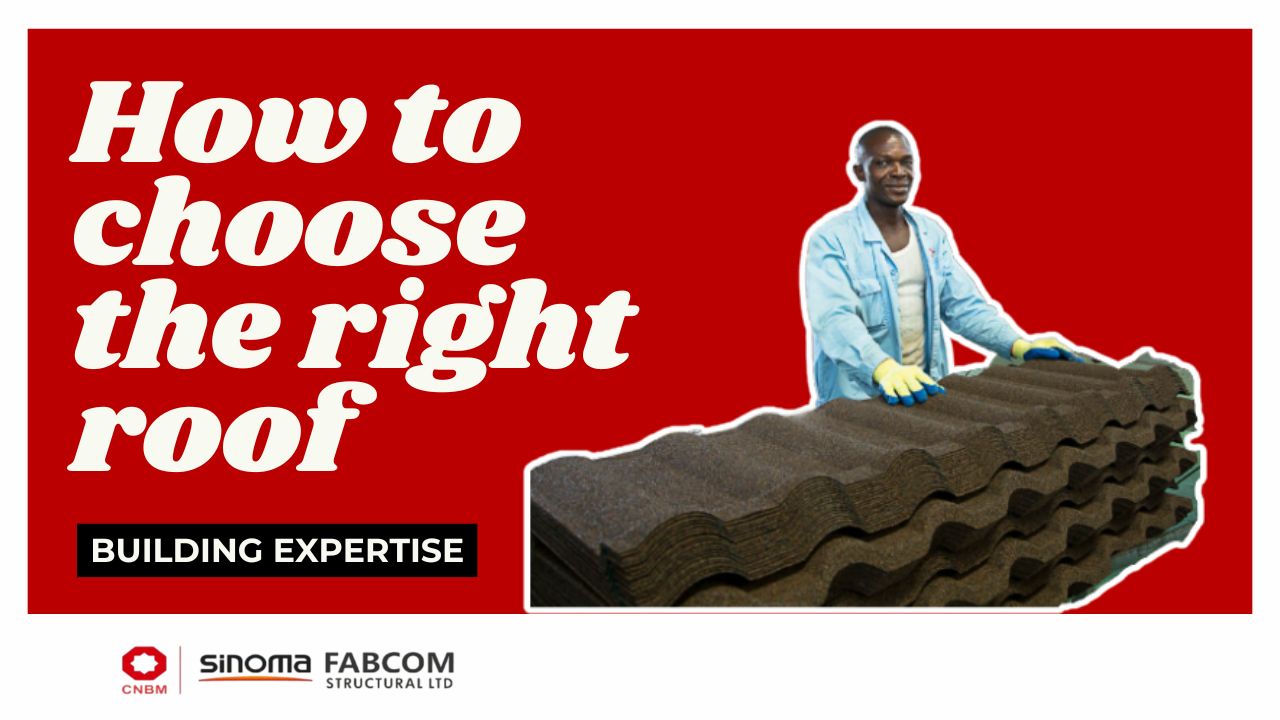
Choosing the right roof is one of the most important decisions in any building project, as it affects how long your building lasts, it also affects how often you spend on repairs, it affects how the house looks after years of use, and it also affects what happens inside the building when rain, heat, and humidity increase.
Most people understand that roofing is important, yet this is where choosing the right roof often goes wrong.
By the time roofing starts, the project is already deep into construction. Money has been spent on land, structure, finishing plans, and labour. At that stage, attention shifts to completing the project. Roofing becomes something to finish quickly, and that is where problems begin.
Decisions are made based on what is available, what looks acceptable, or what appears affordable at the moment. The long-term performance of the roof is not always considered in detail.

The problem is that those poorly thought-out roofing decisions made don’t show their consequences immediately. They show up years later, either by leaking, rusting, multiple repairs, ceiling replacement, spending money twice and many more.
At Fabcom Structural Ltd., working across different types of projects in Nigeria, this pattern comes up often. The same issues repeat because the same decisions are made early without full clarity.
- 1. Will this roof protect my home for decades?
- 2. Am I choosing based on price alone, or long-term value?
- 3. How will this roof look years from now?
- 4. How much maintenance will this roof require?
- 5. Is this roof suitable for reroofing?
- 6. How noisy will the roof be during rain?
- 7. Will this roof affect indoor heat?
- 8. What warranty and support come with this roof?
- Making the Right Roofing Decision
Choosing the right roof comes down to understanding what the material will do over time, not just how it looks during installation, and the 8 questions below should guide that decision, as many homeowners underestimate how choosing the right roof affects long-term cost, comfort, and maintenance.
1. Will this roof protect my home for decades?
The roof you decide on should not just survive one bad weather, but it should provide that protection, 20 or 40 years from the day of production, as Nigeria’s weather places constant pressure on roofing materials, because the rainfall is heavy in many parts of the country, the heat and sunlight are consistent, and humidity affects how roofing materials behave over time.
One of the most common mistakes we see is choosing very thin zinc because it looks affordable at the point of purchase, but within two to five years, rust will start to appear, you will start fixing regularly, and start noticing leakage. Before you know it, the “cheap” roof has already cost more than expected.
Materials like stone-coated steel tiles and properly graded long-span coloured steel perform better over time. They resist corrosion. They handle heat better. They don’t degrade as quickly under constant sun and rain.
We have worked with families who replaced the traditional zinc after 2–5 years because the repairs became a constant issue. After reroofing with stone-coated tiles, they are now looking at several decades of performance without the same stress.
2. Am I choosing based on price alone, or long-term value?
Most projects come with their own budget, which is why the cost of any materials used in building a structure should not be ignored. When it comes to buying a roofing material, the price should not be the only filter, as it is not a product that can be refreshed easily, and making a poor choice can lock you into repeated spending, replacement, repairs, labour and damage to ceilings and wiring.
At Fabcom Structural, roofing options are structured in our datasheet so customers can match durability to budget instead of forcing one option on everyone.
- Fabcom products sit in the middle. Balanced strength and cost.
- ApexStone is built for customers who want long-term durability and appearance without compromise.
- SolarStone combines roofing with energy generation for homeowners who are thinking long-term about power costs.
The goal is to help you avoid buying something that will need replacement too soon, so you don’t incur fewer repairs. In lower maintenance. In peace of mind.
3. How will this roof look years from now?
Here is the catch, a new roof almost always looks good on day one, but the real test is what it looks like after years of sun, dust, and rain, as the 3 element tends to affect how materials look after installation. Some of the roofing materials lose colour quickly, while others begin to show uneven fading and rust marks.
For instance, Stone coated roofing maintains its surface through the use of coated steel and stone granules, as it helps the roof hold its colour and texture for much longer. Long-span coloured steel also performs better than untreated zinc when properly installed.
Appearance also affects property value. A house with a strong, well-kept roof is easier to rent, sell, or pass on. People notice roofs even when they don’t consciously think about them.
4. How much maintenance will this roof require?
Some roofing materials demand more attention during the rainy season due to loose sheets, patchwork and sheet replacement and less attention during the harmattan season, and this ongoing stress is rarely factored in at the point of purchase.
Which is why you need to remember that low-quality roofing materials tend to dent easily, rust faster, and loosen under wind pressure, and each of these issues adds to the cost and can be inconvenient.
Stone coated steel and well graded long span roofing are designed to reduce these problems as they resist impact, hold fasteners better and are less likely to shift under wind and heavy rain.
One thing I want you to keep in mind is that low maintenance does not mean zero attention forever, it means fewer emergencies and predictable upkeep, which reduces long-term cost and the likelihood of unexpected issues.

5. Is this roof suitable for reroofing?
Many buildings are not starting from scratch, for instance, some are replacing old roofs, and this brings different challenges, such as taking note of the weight, installation time and the stress level on the structure.
For example, thatch and clay roofs are heavy, and since it is found mainly in older buildings, they can strain roof structures that were not designed to carry that load.
Stone-coated steel tiles are significantly lighter. They offer durability without overloading the structure. Zinc stone-coated sheets also provide a lightweight upgrade for homes coming from rusted zinc.
Which is why choosing the wrong material during reroofing can lead to additional structural work that was never planned for.
6. How noisy will the roof be during rain?
Noise is one of the most overlooked roofing concerns until the first heavy rainfall, which can then affect your comfort
Traditional zinc sheets amplify sound, and during heavy rain, sleeping, talking, or working indoors can become uncomfortable, while stone coated roofing naturally reduces noise because of its layered structure and stone coating. Long-span roofing can also be quiet when installed with proper underlay.
This factor is often ignored during selection but becomes noticeable after installation.
7. Will this roof affect indoor heat?
Ordinary zinc absorbs heat quickly. By afternoon, the space underneath becomes uncomfortable, increasing dependence on fans or air conditioning.
Stone coated roofing uses reflective pigments that help manage heat absorption. SolarStone takes this further by converting sunlight into usable energy while still functioning as a roof.
Better temperature control reduces electricity use and improves everyday comfort.
8. What warranty and support come with this roof?
The reliability of a roofing system depends on more than the material, you have to look at the availability of support materials, installation guidance and product warranty matters.
A manufacturer with local presence can provide:
- Product guidance
- Installation support
- After-sales assistance
Fabcom Structural operates from Abuja, Lagos, Benin, Onitsha, and Ogun, with product ranges designed for different building needs, as support is provided to ensure that the installation matches the requirements of the roofing system.
Making the Right Roofing Decision
Choosing the right roof requires understanding how the material will perform over time cause these roofs are not to be replaced frequently, therefore, performance, maintenance, structure, and support must be considered early, so you can have a roofing solution that consistently performs without repeated intervention.
Choosing a roof is not about grabbing the cheapest sheet or the most popular profile. It is about understanding what you are paying for and what you will live with over time. The right roofing decision reduces repairs, protects your home, maintains appearance and lowers stress.
At Fabcom Structural Ltd., roofing solutions are built around real Nigerian conditions and real homeowner needs. From families replacing rusted zinc, to builders working on estates, to homeowners combining roofing with energy generation.
For more information, use the form below or send us a message on WhatsApp!
Your message has been sent
Our team will contact you shortly within 24 hours with your quote and more information about your roofing needs. Thank you
