
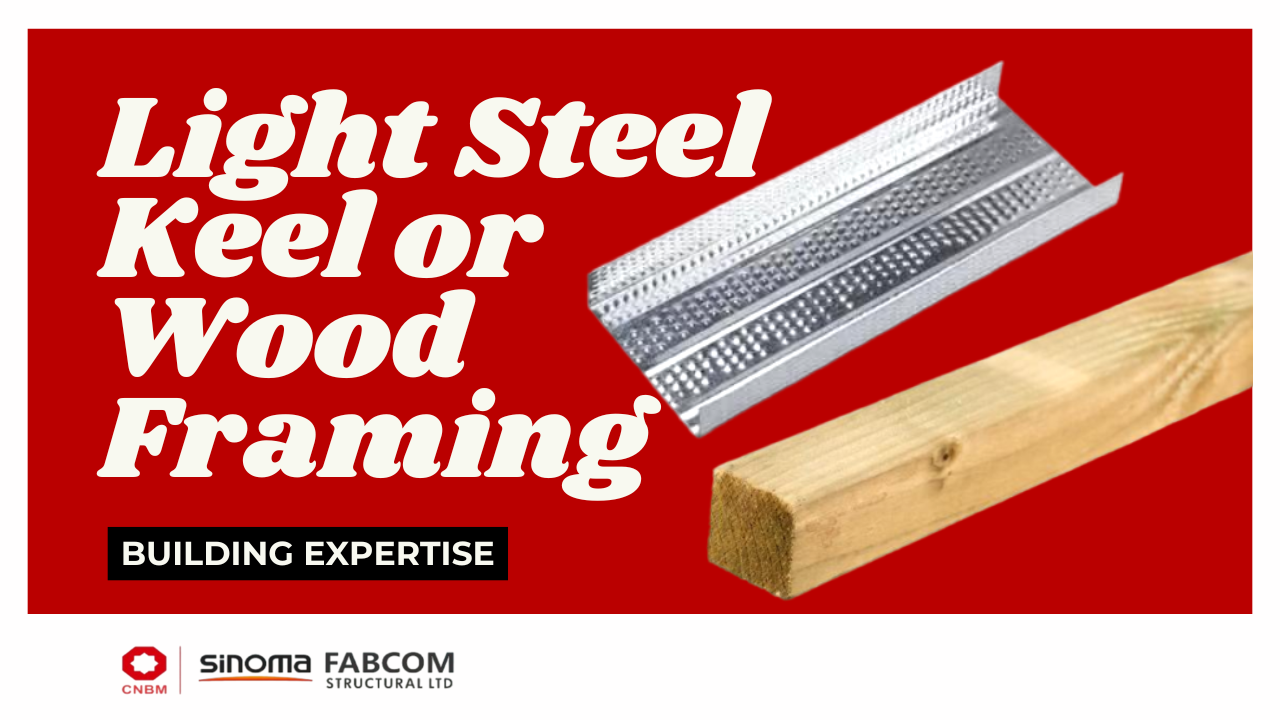
If you are building or renovating a house, shop, office, or commercial space in Nigeria, one decision you may not expect to stress you is what goes inside your walls and ceilings.
This guide answers real questions Nigerians search for online about light steel keel or wood, ceiling framing, wall partitions, and long-term building durability.
Most people focus on roofing sheets, tiles, or paint. But the hidden structure, what holds the ceiling, partitions, and sometimes even the roof, matters just as much.
At Fabcom Structural, one question keeps coming up:
“Should I use light steel keel or wood for my ceiling, wall, or roof framing?”
- First, what are we comparing?
- The real reason people still consider wood
- Light Steel Keel or Wood: The questions customers actually ask
- Light Steel Keel or Wood: Side-by-side comparison
- Who should choose Light Steel Keel instead of wood?
- Why builders are switching to Light Steel Keel
- So Which is better?
- Frequently Asked Questions (FAQs)
- What This Decision Really Means for Your Building
- Talk to Fabcom Structural Team
Which is why we breaks it down in simple terms by focusing on what actually matters when you are
spending your money.


First, what are we comparing?
What is Wood Framing?
Wood framing uses timber planks or boards to support ceilings, walls, and sometimes roofing. It has been used for years and is familiar to many artisans.
What is Light Steel Keel?
Light Steel Keel (LSK) is a cold-formed steel framing system. It is made from galvanized steel and used for ceilings, partitions, wall framing, and roofing structures.
Fabcom Structural supplies Light Steel Keel systems for ceiling, wall, and roof applications, designed for strength, accuracy, and long-term performance.
The real reason people still consider wood
Let us be honest.
Most people consider wood for 3 reasons:
- It feels familiar
- Artisans already know how to use it
- It looks cheaper at first glance
But buildings are not short-term purchases. What looks cheaper today can cost much more later.
Light Steel Keel or Wood: The questions customers actually ask
1. Which one lasts longer?
Wood:
Wood is vulnerable to termites, moisture, rot, and fungi. In many Nigerian buildings, ceiling collapse happens because the wood frame slowly weakens over time.
Light Steel Keel:
Steel does not rot. It does not attract termites. Properly galvanized light steel keel can last decades without losing strength.
What this means for you:
If you want peace of mind and fewer repairs, light steel keel clearly lasts longer.
2. Which one is safer?
Wood:
Wood is combustible. In case of fire, it fuels the spread. Also, inconsistent wood quality can lead to sagging ceilings or weak partitions.
Light Steel Keel:
Steel does not burn. It maintains structural shape better under heat and offers more predictable performance.
What this means for you:
Light steel keel gives better fire safety and structural reliability.
3. Which one handles Nigerian weather better?
Wood:
Changes in humidity can cause wood to expand, shrink, or warp. Over time, this leads to cracks, uneven ceilings, and finishing issues.
Light Steel Keel:
Steel does not warp with humidity. It stays straight and stable across seasons.
What this means for you:
Your ceilings and walls stay neat for longer with light steel keel.
4. Which one is faster to install?
Wood:
Installation depends heavily on the artisan’s skill. Measurements are often done manually, which can lead to mistakes and rework.
Light Steel Keel:
Light steel keel is factory-formed and precise. Installation is cleaner, faster, and more consistent.
What this means for you:
Less delay. Less waste. More predictable project timelines.
5. Which one is really cheaper?
This is where many people get surprised.
Wood (short-term thinking):
Wood may appear cheaper at purchase, but you pay later through:
- Termite treatment
- Repairs
- Ceiling replacements
- Sagging or collapse risks
Light Steel Keel (long-term thinking):
The initial cost may be higher, but maintenance is minimal and lifespan is much longer.
What this means for you:
Light steel keel often costs less over the life of the building.

Light Steel Keel or Wood: Side-by-side comparison
| Feature | Wood | Light Steel Keel |
|---|---|---|
| Termite resistance | No | Yes |
| Fire resistance | Low | High |
| Moisture resistance | Weak | Strong |
| Strength consistency | Varies | Uniform |
| Installation speed | Slower | Faster |
| Long-term cost | Higher | Lower |
Who should choose Light Steel Keel instead of wood?
Light steel keel is ideal if you are:
- Building a new home
- Renovating an old ceiling
- Constructing offices, schools, hotels, or hospitals
- Tired of ceiling issues caused by wood
- Planning for long-term durability, not quick fixes
Why builders are switching to Light Steel Keel
At Fabcom Structural, our light steel keel systems are:
- Made from high-quality galvanized steel
- Designed for ceiling, wall, and roof framing
- Consistent in thickness and strength
- Suitable for residential and commercial projects
As Fabcom Structural understand how buildings behave in Nigerian conditions with our 10+ years of experiences.
So Which is better?
If your goal is short-term savings, wood may look attractive.
If your goal is safety, durability, and peace of mind, light steel keel is the smarter choice.
That is why more developers, builders, and homeowners are moving away from wood and choosing light steel keel.
Frequently Asked Questions (FAQs)
Is light steel keel stronger than wood?
Yes. Light steel keel has uniform strength and does not weaken due to termites, moisture, or rot. Wood strength varies depending on quality and age.
Can light steel keel carry a POP ceiling and ceiling fan?
Yes. When properly installed, light steel keel supports POP ceilings, boards, lighting fittings, and ceiling fans.
Does light steel keel rust over time?
Quality light steel keel is galvanized to resist corrosion. When used indoors, rust is uncommon.
Is light steel keel noisy or vibrating?
No. Proper spacing and fixing prevent vibration or noise.
Is light steel keel suitable for Nigerian homes?
Yes. It is used in residential, commercial, and institutional buildings across Nigeria
Can local artisans install light steel keel?
Yes. Many installers already work with it, and Fabcom Structural provides guidance.
What This Decision Really Means for Your Building
Choosing between light steel keel or wood is a structural decision that affects how your building performs over time.
Wood framing has been used for a long time in Nigeria, mostly because it is familiar and widely available. That familiarity does not change how wood behaves under moisture, termite activity, or long-term load. Even treated wood loses protection over time. Once the internal strength is compromised, the ceiling above it becomes unsafe.
Light steel keel was adopted because buildings needed materials that behave consistently. Steel does not rot. It does not attract insects. It does not change shape with humidity. Its strength remains stable across seasons and years. This consistency reduces uncertainty during construction and lowers the risk of failure after handover.
This difference between light steel keel or wood matters more now, because buildings are heavier and more complex. POP ceilings, lighting systems, ceiling fans, electrical runs, and longer occupancy all place more demand on framing systems. Materials that performed adequately in the past often struggle under these conditions.

The cost of getting this decision wrong is not limited to repairs. It affects safety, tenant confidence, and long-term maintenance budgets. Once ceilings are installed, fixing framing problems is disruptive and expensive. Most owners only discover these issues after damage has already occurred.
Light steel keel is not chosen because it is new or different. It is chosen because it removes common failure points associated with wood framing in Nigerian buildings. For homeowners and developers who want stable ceilings, predictable performance, and fewer long-term problems, steel framing provides a safer foundation.
At Fabcom Structural, light steel keel is supplied for ceiling, wall, and roof framing because it aligns with how buildings are actually used and maintained in Nigeria. The goal is simple. Build once. Reduce risk. Avoid preventable problems.
Talk to Fabcom Structural Team
If you are considering light steel keel for your ceiling, wall, or roof structure, our Sales team can guide you on:
- Suitable profiles for your project
- Quantity estimation
- Best application for your building type
For more information, use the form below or send us a message on WhatsApp!
Your message has been sent
Our team will contact you shortly within 24 hours with your quote and more information about our roofing solution and price. Thank you
