
As a homeowner planning to use solar energy, the process usually goes like this: complete the house, install the roofing sheets, and then bring in a solar installer. The installer mounts conventional solar panels above the roof, secures the mounting brackets to the structure and connects the panels to an inverter and batteries. The system begins generating electricity, and the homeowner can now use solar power alongside the available grid supply.
The arrangement can work well when it is designed and installed correctly. However, you have now committed to two separate installations: the roof covering and the solar panel system. If a panel needs to be replaced, a cable needs attention, or a section of the roof requires repair, the work may involve removing part of the solar installation before the roofing contractor can access the affected area. Where roof penetrations have been poorly sealed, or the mounting points have deteriorated, the work can also expose weaknesses in the roof’s weatherproofing.
- What Are Solar Roofing Tiles?
- Why Consider Solar Roofing Tiles from Fabcom Structural?
- Generate electricity from part of your roof
- Plan the roof and solar system together
- Reduce certain roof-penetration risks associated with conventional solar mounting
- Consider the roof’s structural requirements before installation
- Plan for future repairs and replacement work
- Combine a stone-coated roof finish with solar generation
- Support more considered energy use
- Is Solar Stone-Coated Roofing a More Sustainable Choice?
- What Should You Check Before Buying Solar Roofing Tiles?
- Frequently Asked Questions
- Is Solar Roofing Right for Your Property?
For anyone building a house in Nigeria, replacing an old roof, or planning a property where electricity supply is a major consideration, consider this before construction is complete. Fabcom Structural Solar Stone Coated Roofing offers another option. The solar roofing tiles is integrated into a shingle-style roofing product, allowing compatible roof sections to serve as part of the building’s electricity-generation system. This blog post explains the practical advantages, the limitations to understand and the questions to ask before deciding whether solar roofing tiles are suitable for your property.

What Are Solar Roofing Tiles?
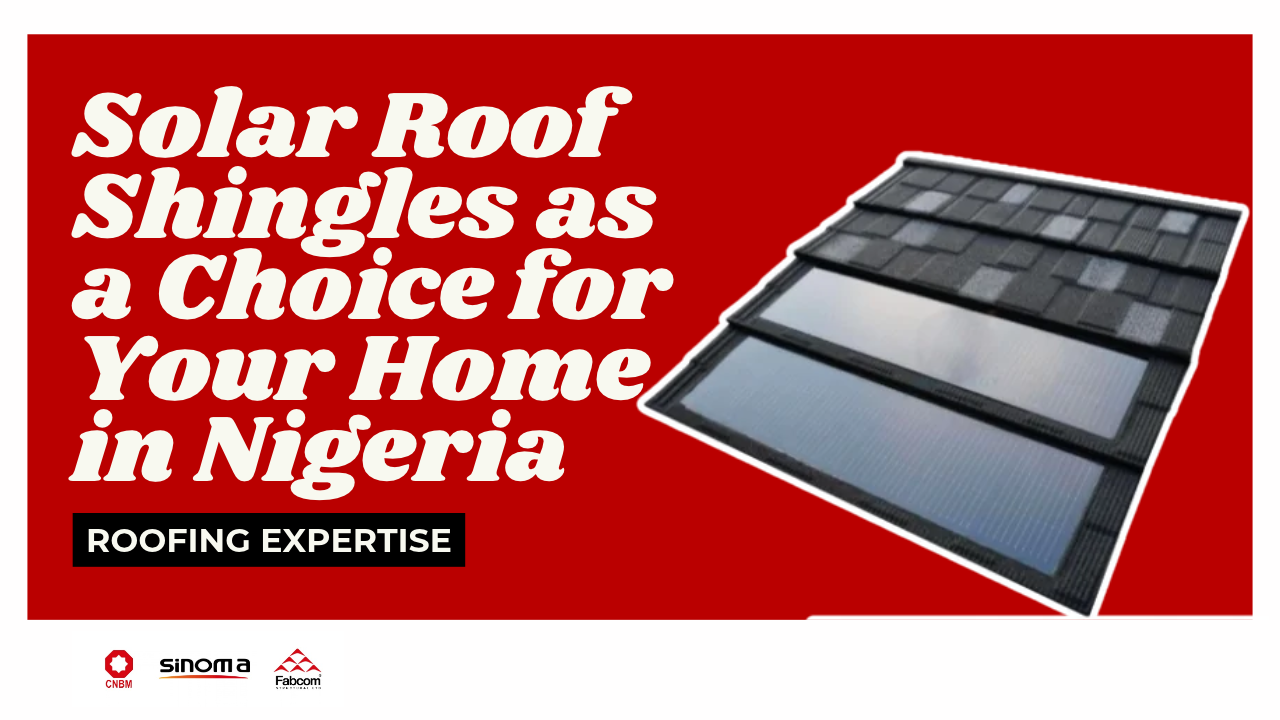
Solar roofing tiles are roofing units that incorporate photovoltaic technology to generate electricity from sunlight. They are also known as solar shingles or solar roof tiles. Unlike a conventional rooftop solar installation, where separate panels are mounted above the roof covering, an integrated solar roofing product forms part of the roof itself in the areas where the solar units are installed.
Fabcom Structural Solar Stone Coated Roofing combines solar-generating technology with a shingle-style stone-coated roofing design. Each of our solar roofing tiles has a nominal power rating of 80 watts. The electricity generated can be used through a properly designed system that includes the appropriate inverter and, where required, battery storage.
The tile is the part that generates electricity, but the amount of power available to a household depends on the number of tiles installed, the sunlight reaching them, shading, system losses, inverter capacity and the home’s electricity consumption. Solar roofing tiles are particularly worth considering when the roof is still being designed. The homeowner, architect, roofing contractor and solar system designer can assess the suitable roof sections, structural requirements, cable routes and equipment locations before the work begins so that it is easier to coordinate the roofing and electrical work and understand the full cost before committing to the installation.
Why Consider Solar Roofing Tiles from Fabcom Structural?
Generate electricity from part of your roof
One of the main reasons to consider solar roofing tiles is the opportunity to generate electricity from the roof area itself, and for Nigerian households dealing with unreliable grid supply or the cost of running generators, solar generation can contribute to the electricity available for daily use.
The amount of electricity a solar roof can provide depends on the system design, and our solar roofing tiles have a nominal rating of 80W each, so 25 tiles would have a combined nominal capacity of 2kW. This is the system’s rated power under specified test conditions, not a promise that it will supply 2kW continuously or generate a fixed quantity of electricity every day.
Actual generation varies with sunlight, roof orientation, shading, temperature and system losses as a household with several air conditioners, water pumps and other high-power appliances will have different requirements from a smaller household that mainly needs to run lights, fans, refrigeration and electronics. This is why we recommend that the number of tiles, inverter capacity and battery provision should be selected around the intended use.
Plan the roof and solar system together
When conventional solar panels are installed after roofing work has been completed, the solar installer has to work with the existing roof design. The mounting arrangement must be suitable for the roofing material and supporting structure, while the installation must also account for waterproofing, cable routes and access for future maintenance.
Solar stone-coated roofing gives homeowners the option to consider solar generation while the roof covering is being selected. This can help the project team coordinate the appearance of the roof, the areas intended for solar generation and the electrical equipment required to use the power.
For example, someone building a detached house can ask the architect to identify suitable roof sections before the final roofing specification is approved. The solar installer can then assess the available sunlight, determine the appropriate solar capacity and plan where the inverter and batteries will be located. The roofing contractor can work from the agreed design rather than making changes after the roof has been completed. This can reduce the need for repeated access to the roof, which may cause damage to the roofing material, particularly when conventional solar panel installations require existing roofing sheets to be drilled, removed or refitted.
Reduce certain roof-penetration risks associated with conventional solar mounting
Roof leakage is a concern for any homeowner, especially where rainwater can damage ceilings, timber framing, electrical fittings and interior finishes, and conventional rooftop solar installation may require mounting brackets or other fixings to connect the panel system to the building structure. Where these fixings pass through the roof covering, the installation must be properly detailed and sealed to prevent water ingress.
The risk depends on the roof type, mounting arrangement, workmanship, materials and maintenance. Conventional solar panels do not automatically cause leaks, and a correctly installed system can perform reliably. Problems are more likely when the roof is penetrated or modified without adequate waterproofing, or when later work leaves vulnerable points poorly sealed.
With solar stone-coated roofing, the solar-generating component forms part of the roofing product in the sections where it is installed. This changes the arrangement compared with mounting separate panels above a completed roof. It can reduce the need for a separate panel mounting structure over those sections, although the roof still requires correct installation, suitable flashing and detailing, and proper management of rainwater.
As homeowners, you should therefore compare the actual installation methods rather than assume that one system is leak-proof. Ask the supplier and contractor how the solar tiles will be fitted, how adjoining roof sections will be sealed and who will be responsible if a leak develops.
Consider the roof’s structural requirements before installation
A roof must be designed to support the loads imposed on it and these include the weight of the roofing material and any additional equipment installed above or within the roof system. Conventional solar panels, mounting rails, brackets and associated equipment add load to the supporting structure. The location of mounting points can also affect how that load is transferred to the roof framing.
Solar roofing tiles also have structural requirements, so professional is needed to assess the roof structure or follow the manufacturer’s installation specifications. The relevant comparison is the total load and installation arrangement of each proposed system, not simply whether one product is integrated into the roof.
If you are building a new home, ask the project team to include the intended solar roofing system in the roof design, and if the house is already roofed, have the structure inspected before choosing between integrated solar roofing and conventional panels, as this will reduce the risk of discovering that strengthening work or other modifications are required after materials have been purchased.

Plan for future repairs and replacement work
With conventional solar panels, repairs to a section of roofing beneath the panel array may require some panels and mounting components to be removed first. If the work involves mounting points or cables, the contractor may also need to check that the roof’s waterproofing remains sound when the equipment is reinstalled. The extent of the work depends on the location of the fault and the mounting arrangement.
The Integrated solar roofing tiles have a different maintenance arrangement because the solar-generating units form part of the roofing system. The installation team should explain how individual units can be inspected or replaced, how electrical faults will be isolated and how the roof will be protected during repairs and this does not mean that maintenance is unnecessary or that every repair will be simpler, so these details should be established before purchase.
Ask who handles roofing-related issues and who handles the solar system. Confirm how warranty claims are managed if a fault affects both the roof covering and the electrical equipment. These questions are easier to resolve before installation, when the responsibilities can be recorded in the quotation and agreed scope of work.
Combine a stone-coated roof finish with solar generation
The Solar Stone Coated Roofing is designed around a shingle-style stone-coated roof product with integrated solar technology. It gives homeowners an option to explore when the architectural design calls for a compatible shingle-style roof and the project also requires solar generation.
The suitability of the product depends on the roof design and the manufacturer’s installation requirements; therefore, it should not be assumed that solar tiles can be fitted interchangeably with every roofing profile or used across every part of a roof. The architect and roofing contractor should establish which sections are compatible and how the solar areas will connect with the remaining roof covering.
For a new home, this decision is best made before roofing materials are ordered as it allows the owner to compare the desired appearance, solar capacity and overall cost while the project team can still make changes to the design.
Support more considered energy use
Solar energy can help reduce reliance on grid electricity and generator use when the system is correctly designed and the household uses the generated electricity effectively. The actual financial benefit depends on the amount of energy generated, when the household consumes it, the cost of alternative electricity sources, the equipment installed and the cost of maintaining the system.
A home that uses much of its electricity during daylight hours may be able to use solar generation directly for suitable loads. A household that needs more electricity at night may require batteries or another source of power to meet its requirements. Battery capacity, inverter sizing and the expected load therefore need to be considered alongside the solar roofing tiles.
Solar roofing should not be purchased on the assumption that it will eliminate electricity bills or generator use. Instead, ask for a system assessment based on your household’s consumption and the available roof area. This will help establish what the system is likely to contribute and whether additional equipment is required.
For homeowners planning a long-term residence, this assessment can form part of a broader decision about the property’s electricity arrangements. It can also provide a more useful basis for comparing solar roofing with conventional rooftop solar panels.
Is Solar Stone-Coated Roofing a More Sustainable Choice?
Sustainability depends on how a product is manufactured, transported, installed, used and eventually replaced, and the solar roofing tile can contribute to renewable electricity generation because it converts sunlight into electricity during operation. The extent of the environmental benefit depends on the system’s lifetime generation, the electricity it displaces, the equipment used and how the components are maintained and managed at the end of their service life.
For a Nigerian homeowner, solar generation may reduce the amount of grid electricity or generator-produced electricity required, depending on the system design and the household’s consumption. That can be a practical consideration when the homeowner wants to reduce dependence on fuel-powered backup generation. The result should be assessed against actual electricity use rather than assumed from the presence of solar tiles alone.
Integrated solar roofing also needs to be considered as a complete building product since the roof must continue to protect the building from rain, the solar components must generate electricity as expected, and the system must remain maintainable. If the roof is poorly designed or a component cannot be repaired properly, premature replacement can reduce the benefits of the original investment.
So remember to ask us about the product specification, maintenance requirements, warranty terms and the process for replacing damaged components.
What Should You Check Before Buying Solar Roofing Tiles?
Before purchasing Fabcom Structural Solar Stone Coated Roofing, work through the following checks with your architect, roofing contractor and solar system designer.
- Establish whether the proposed roof sections are suitable for the shingle-style solar roofing product. If the building is already roofed, arrange for a professional inspection to check the condition of the existing roof and determine what changes may be required.
- List the appliances the system is expected to support and estimate how much electricity they use. This will help the designer determine the required solar capacity, inverter size and battery provision.
- Identify the roof sections that receive useful sunlight and consider the effect of nearby buildings, trees and other obstructions. Available roof area alone does not determine how much electricity the system will generate.
- Ask which roofing materials, solar tiles, inverter, batteries, electrical components, installation work and other items are included. A clear scope makes it easier to compare the full cost with other solar options.
- Confirm who will install the roofing product, who will carry out the electrical work and who will test the completed system. Fabcom Structural supplies roofing and solar products; confirm installation arrangements with the relevant qualified contractors before proceeding.
- Ask for written terms for the solar roofing product and each associated electrical component. Confirm what each warranty covers, its duration, the conditions that apply and how to make a claim.
- Establish how the roof and solar components will be inspected, how damaged units will be replaced and who will handle future repairs. This is important for any system expected to remain in service for years.
These checks help turn a product enquiry into a properly scoped project. They also make it easier to identify issues before materials are delivered or construction work begins.
Frequently Asked Questions
Can the solar roofing tiles reduce electricity costs?
The amount saved depends on system capacity, sunlight, household consumption, battery use, installation cost and maintenance. Request an assessment based on your actual energy requirements before estimating savings.
Do solar roofing tiles prevent roof leaks?
This is not leak-proof, as the roof still needs correct installation, suitable detailing, proper rainwater management, workmanship and maintenance remain important.
Are solar roofing tiles lighter than conventional solar panels?
Conventional panels and their mounting equipment add load to a roof, while solar roofing has its own product weight and structural requirements.
What happens if a solar roofing tiles needs to be replaced?
The replacement process depends on the product design, the location of the affected tile and the initial arrangement
Does Fabcom Structural install solar roofing tiles?
Please arrange installation with qualified contractors and confirm who is responsible for roofing work, electrical connections, testing and after-sales support before proceeding.

Is Solar Roofing Right for Your Property?
Solar roofing tiles are worth considering if you are building a new home, replacing a roof or planning a property where roof design and electricity generation need to be considered together. Fabcom Structural’s Solar Stone Coated Roofing provides an option for compatible shingle-style roof sections, with each tile carrying a nominal rating of 80W.
The practical advantages depend on the building and the way the system is designed. Integrated solar roofing can change how the solar components fit into the roof, may reduce the need for separate panel mounting structures over the compatible sections and gives the project team an opportunity to plan the roof and electricity system together. It still requires a suitable roof structure, correct installation, electrical design and a clear maintenance plan.
If you are comparing solar roofing with conventional rooftop panels, request a comparison of the complete installed systems. Look at the roof’s compatibility, expected electricity generation, structural requirements, installation costs and future maintenance arrangements. That will give you a stronger basis for deciding which option suits your property.
To explore Fabcom Structural Solar Stone Coated Roofing, review the product information and speak with the sales team about your proposed roof design and intended electricity requirements. With the right information, you can establish whether solar roofing is suitable for your project before making a purchase decision.
Your message has been sent
Our team will contact you shortly within 24 hours with your quote and more information about your roofing needs. Thank you
