
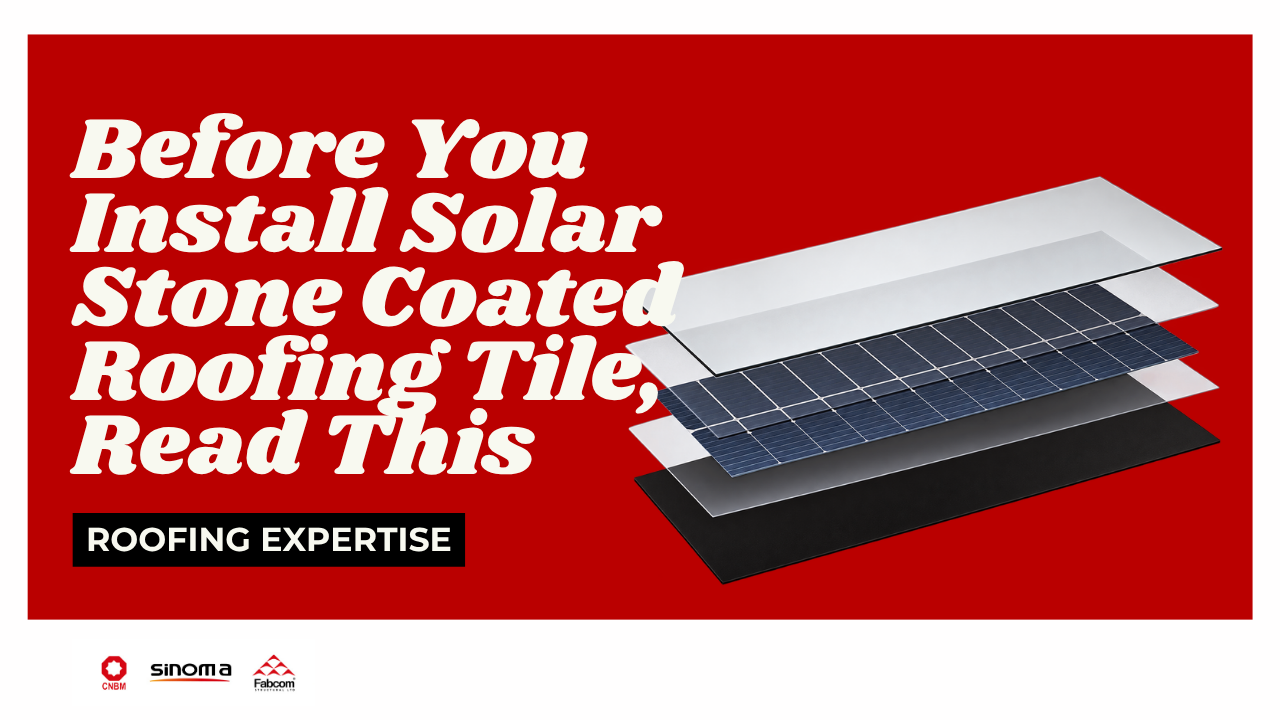
If you are building a new house and have already started comparing roofing options, you may have reached the point where the roof is no longer just about covering the building. You may want the appearance of a stone-coated roof while also using part of the roof to generate electricity. That is where solar stone-coated roofing tile, also called solar shingles, comes into the discussion.
This is also where buyers can make expensive decisions too early. A customer may see the solar roofing tile, calculate how many tiles appear to fit on the roof and ask for a price. The more important questions come first. Is the roof suitable? How much solar capacity does the building need? Where will the inverter and batteries go? How will the wiring be routed? Which parts of the roof will be solar and which will remain conventional roofing? Who is responsible for the roofing work, and who handles the electrical installation?
- What does Solar Stone Coated Roofing Tile mean
- Is Your Roof Suitable for Solar Stone Coated Roofing?
- Do Not Decide the Number of Solar Tiles From the Roof Size Alone
- Your Roof Does Not Have to Be Completely Solar
- Check Sunlight and Shading Before Installation
- Plan the Inverter and Battery Location Before Roofing Starts
- The Roof Still Has to Manage Rain Properly
- Decide Who is Responsible for the Installation
- What Should Be Included in a Solar Roofing Quotation?
- Solar Roofing Maintenance is Still Part of Ownership
- How Often Will the Solar Roof Need Maintenance?
- Understand the Warranty Component by Component
- What Happens if the Roof Needs Repair Later?
- Solar Stone Coated Roofing for a New Building Needs Earlier Planning
- What if You Already Have an Existing Roof?
- A Practical Solar Roofing Checklist Before You Pay
- Solar Roofing Should Be Planned as Part of the Building
These details affect the installation, the final appearance of the roof, the performance of the solar system and what happens when something needs to be repaired later.
This guide is for homeowners, developers, architects, contractors and project owners who are considering solar stone coated roofing and want to understand what should be checked before buying or installing a solar stone-coated roofing tile system. It focuses on the practical decisions that should happen before materials arrive on site.

What does Solar Stone Coated Roofing Tile mean
Solar stone coated roofing tile is a roofing product that incorporates solar-generating technology into a roof designed to have the appearance and function of a stone-coated roofing system. It is also commonly described as solar shingles or solar roofing.
A conventional solar installation usually involves installing solar panels above an existing roof. With an integrated solar roofing system, the solar-generating component becomes part of the roof design.
With conventional rooftop solar, you can often install the roofing material first and add the solar panels afterwards, depending on the roof’s suitability and the mounting system. With integrated solar roofing, the solar section needs to be considered as part of the roof layout from the beginning.
This does not mean that the entire roof has to become solar, for example, a homeowner may have a stone-coated shingle roof across most of the building and use solar stone-coated roofing tiles on a selected section. The appropriate arrangement depends on the roof design, the electrical requirement, the available sunlight and the solar product being specified.
Fabcom Structural solar stone-coated roofing tile is rated at 80W per tile. That rating gives you a way to understand the nominal capacity of the solar roofing being considered. If a project uses 20 tiles, for example, the combined nominal rating would be 1,600W. Actual electricity generation will vary according to sunlight, shading, orientation, temperature, system losses and other operating conditions.
That distinction matters when you are discussing the number of solar tiles required. The number should come from the system design, rather than simply from the amount of roof space available.
Is Your Roof Suitable for Solar Stone Coated Roofing?
A roof can have enough physical space for solar roofing and still require changes before installation.
The first assessment should look at the condition and structure of the roof. This is particularly important for an existing building. If there are damaged roof members, leaks, deterioration or other structural concerns, installing solar components before dealing with them can make future repairs more difficult.
For a new building, the opportunity is different because the roofing system can be considered while the building is still being designed.
The roof assessment should consider:
| Area to check | Why it matters |
|---|---|
| Roof structure | The roof needs to safely support the proposed roofing system and associated equipment. |
| Roof condition | Existing defects should be addressed before installation. |
| Roof design | The shape and available areas determine where solar tiles can be installed. |
| Orientation | The direction of the usable roof surfaces affects sunlight exposure. |
| Roof slope | The product and installation method need to be compatible with the roof design. |
| Shading | Trees, buildings and other obstructions can reduce solar generation. |
| Drainage | Solar roofing should not interfere with the movement of rainwater. |
| Maintenance access | Future inspection and repairs need to remain practical. |
The Technical Standards by the Rural Electrification Agency Nigeria recommend assessing roof condition, structural suitability, solar resource and electricity requirements before proceeding with a rooftop solar project.
For an existing Nigerian home, this assessment is particularly useful because the building may have been designed without solar roofing in mind. The roof structure, electrical distribution and equipment location may therefore need to be considered together before installation.
Do Not Decide the Number of Solar Tiles From the Roof Size Alone
A common mistake is to approach solar roofing as a roofing quantity exercise, a roofer may be able to calculate how many roofing tiles are required for the roof. That does not automatically tell you how many solar tiles are required.
The solar requirement starts with the building’s electricity, you need to consider the appliances and loads you want the system to support. A house using lighting, fans, televisions and refrigeration will have a different requirement from a larger property that also wants to support air conditioning, water pumping and other high-load equipment.
The solar roof also has to work within the physical limits of the building.
Suppose your energy requirement calls for more solar capacity than the suitable roof area can provide. There are several ways the wider system could be designed, depending on the project. You could use additional conventional solar panels, adjust the solar roof area, reduce certain loads, add battery storage or consider another system configuration.
This is why a proper quotation should show the number of solar tiles, their rated capacity, the inverter capacity, battery capacity, where applicable and the other components included in the system.
Your Roof Does Not Have to Be Completely Solar
You may like the appearance of solar shingles but have no reason to cover every part of the roof with solar-generating material which is where a combination of conventional stone coated roofing and solar stone coated roofing can be considered where the roof design allows it.
This can make sense when the customer wants integrated solar generation but the electrical requirement does not justify allocating the entire roof to solar.
It can also help when the most suitable solar area is limited to particular roof surfaces because of orientation or shading.
For example, imagine a house with several roof slopes. One section receives good sunlight and has enough usable area for the intended solar capacity. Another section faces a direction with significant shading from a neighbouring building. Treating both areas as equally suitable simply because they are physically available would not give the same result.
The final layout should therefore show where the solar roofing will be installed and where conventional roofing will be used, therefore, the drawing or roof plan is worth reviewing before production begins.
Check Sunlight and Shading Before Installation
Solar Stone Coated roofing needs sunlight to generate electricity. The roof assessment should therefore look beyond the building itself. Look into trees, neighbouring buildings, water tanks, telecommunications equipment and other structures can cast shadows across the roof during different parts of the day.
A roof that looks sunny at 10am may not have the same exposure later in the afternoon.
The Rural Electrification Agency identifies roof orientation, slope and shading as factors that affect the suitability and output of rooftop solar systems.
For a new development, this can be considered during the building design stage. For an existing property, the installer should assess the actual site rather than assuming that the roof receives sufficient sunlight.
This is particularly important when the buyer is deciding whether to use a particular section of the roof for solar roofing. A good-looking roof section is not necessarily the most productive location for the solar system.
Plan the Inverter and Battery Location Before Roofing Starts
The solar roof is the part people see, but the rest of the solar system still needs a place inside or around the building.
Depending on the system, this can include an inverter, batteries, protection equipment, switches and wiring.
The location should be considered before installation because the distance between the solar roof and electrical equipment affects the cable route and the way the installation is carried out.
The equipment also needs to remain accessible for inspection and servicing. Do not leave this conversation until after the roof has been completed.
A common construction problem is that one contractor completes the roof while another contractor later discovers that there is no convenient route for the electrical cables. The project then requires additional work that could have been avoided during planning.
Before installation, agree on:
- where the inverter will be located;
- where the batteries will be located, if included;
- how the solar cables will leave the roof;
- where the cables will enter the building;
- how cables will be protected;
- how the equipment will be accessed for maintenance;
- and how the system will connect to the building’s electrical installation.
The NEMSA Technical Standard also identifies cable management and the installation of associated electrical equipment as part of proper system planning.
The Roof Still Has to Manage Rain Properly
The fact that a roof contains solar-generating components does not change its basic responsibility as a roof.
Rainwater still needs to move from the roof surface into the appropriate drainage system. Roof junctions, valleys, ridges, edges and other details need to be installed according to the roofing system’s requirements.
This is one area where the installation method matters as much as the product itself.
A solar system can generate electricity correctly, while the roof has a separate installation problem, for a building owner they have to consider both issues.
For that reason, the roofing installer should understand the specific solar stone coated roofing product rather than treating it like an ordinary solar panel installation.
The same applies when dealing with an existing roof. Any required repair or modification should be completed in a way that maintains the roof’s weatherproofing.
The Rural Electrification Agency recommends checking roof condition before solar installation and considering roof penetrations, attachments and waterproofing as part of the installation process.

Decide Who is Responsible for the Installation
Solar stone coated roofing sits between two areas of construction: one is the roofing work, and the other is the electrical work.
The people handling both parts of the project need to understand their responsibilities clearly.
Before you approve the quotation, ask the supplier or contractor:
- Who will install the solar roofing?
- Who will carry out the electrical installation?
- Are different teams responsible for each part?
- Who will test and commission the solar system?
- Who is responsible if there is a roof leak after installation?
- Who should I contact if the solar system stops producing as expected?
These questions can feel administrative before the project starts, but they become important when something goes wrong.
If the roofer says the problem is electrical and the solar installer says it is a roofing problem, the homeowner can end up coordinating between two parties who each believe the other is responsible.
A clear scope of work reduces this problem.
The Rural Electrification Agency guidance on choosing a solar installer also recommends understanding who will perform the work and what responsibilities apply to the installer and any subcontractors.
What Should Be Included in a Solar Roofing Quotation?
Do not compare solar stone coated roofing quotations by looking at the final price alone, cause two quotations can have different prices because they include different things.
One may cover the solar stone coated roofing tiles only. Another may include the roofing installation. Another may include the inverter, batteries, wiring, protection equipment, installation and commissioning.
Ask for the scope to be broken down clearly.
| Item | What to confirm |
|---|---|
| Solar stone coated roofing tile | Product, quantity and rated output per tile |
| Conventional roofing | Product and quantity for the non-solar sections |
| Solar capacity | Total nominal capacity of the proposed solar roof |
| Inverter | Capacity, model and whether it is included |
| Battery | Capacity, model and whether it is included |
| Wiring | What cables and installation work are included |
| Protection | What electrical protection equipment is included |
| Roofing installation | Whether installation is included |
| Electrical installation | Whether electrical connection and testing are included |
| Commissioning | Whether the completed system will be tested |
| Warranty | Warranty period and conditions for each component |
| After-sales support | Who handles faults and service requests |
| Delivery | Whether delivery to site is included |
This also gives you a better basis for comparing suppliers.
If one company quotes ₦X for the solar stone coated roofing and another quotes ₦Y for a complete solar energy system, the numbers do not represent the same purchase.
Solar Roofing Maintenance is Still Part of Ownership
The roofing section, where the stone coated roofing needs to remain in good condition, while the solar components need to be inspected and maintained according to the manufacturer’s requirements.
For the solar system, maintenance can involve checking the solar surface, wiring, connections, inverter and other system components. Battery maintenance will depend on the battery technology and manufacturer’s instructions.
Dirt and dust can also accumulate on solar surfaces. In areas where there is significant dust or nearby construction, the owner may need to pay closer attention to the condition of the solar surface.
Cleaning should follow the product manufacturer’s instructions. Harsh chemicals, abrasive materials or unsuitable cleaning methods can damage solar surfaces. NREL’s photovoltaic operation and maintenance guidance includes inspection and cleaning considerations as part of ongoing PV system care.
The roof should also be inspected for issues such as damaged roofing components, drainage problems and signs of water ingress.
You should therefore ask about maintenance before purchase, not after installation.
How Often Will the Solar Roof Need Maintenance?
There is no single maintenance schedule that applies to every solar roofing system, as the appropriate frequency depends on the product, site conditions, environmental exposure and the manufacturer’s instructions.
A building close to a dusty road or an active construction site may experience more surface contamination than a building in a cleaner environment. Trees around the property can also contribute leaves and debris.
The important question is not simply, “How often should I clean it?”
Ask the installer:
- What maintenance does this specific product require?
- What should the owner inspect?
- What requires a qualified technician?
- How should the solar surface be cleaned?
- What signs indicate a problem?
- Does maintenance affect the warranty?
That gives you information that relates to the actual product rather than a generic solar panel maintenance schedule.
Understand the Warranty Component by Component
Solar Stone Coated roofing systems contain several products, and they may not all carry the same warranty period.
The solar roofing itself may have one warranty. The solar-generating component may have another. The inverter and battery may have separate warranty terms.
For Fabcom Structural current solar offering, the draft warranty structure previously specified is 30 years for the solar roofing, 10 years for the panel, 2 years for the inverter and 2 years for the battery. These terms should be confirmed against the specific product and quotation before purchase.
The useful question is not simply how many years the warranty lasts.
Ask what the warranty covers.
For example:
- Does it cover the product only?
- Does it cover installation labour?
- What happens if a component needs replacement?
- Who removes and reinstalls the affected roofing component?
- Where is the warranty claim made?
- What conditions could invalidate the warranty?
- Is there a required maintenance procedure?
- How is a fault reported?
These details become important when a system is expected to remain in service for years.
What Happens if the Roof Needs Repair Later?
This is one of the questions I would ask before installing any integrated solar roofing system, as a roof is part of a building that will continue to be maintained long after the original construction team has left.
A leak may develop. A roofing component may become damaged. An electrical component may require replacement. A technician may need access to a particular section of the system.
The installation should therefore allow future work to be carried out without creating unnecessary disruption.
This is another reason to think about maintenance access during the original roof design.
If the only way to reach a particular component is to dismantle a large section of the roof, a simple future repair can become a larger job.
The installer should explain how routine inspection, component replacement and roof repairs will be handled.
Solar Stone Coated Roofing for a New Building Needs Earlier Planning
If you are building from scratch, involve the solar stone coated roofing supplier before the final roof design is approved.
This gives the project team time to consider the roof shape, solar section, structural requirements, electrical equipment location, cable routes and maintenance access together.
It also makes it easier to coordinate the roofing and electrical trades.
For example, if the inverter is intended to sit in a particular service area, the electrical route can be planned before walls and ceilings are finished. If the solar roofing is going onto a specific roof slope, the roof design can account for that area from the beginning.
The earlier these decisions are made, the less likely it is that the installer will need to improvise on site.
What if You Already Have an Existing Roof?

If the existing roof is in good condition and is already fitted with shingle stone coated roofing tiles, you may not need to replace the entire roof. The solar stone coated roofing system we are proposing is designed to work with a shingle roof, so only the specific section where the solar roofing will be installed may need to be replaced.
However, if the existing shingle roof is already due for replacement, it may be worth considering the roof replacement and solar installation together.
The important thing is to assess the actual condition of the roof before purchasing the solar stone coated roofing system.
Do not assume that because the solar roofing tiles can physically fit on the building, the existing roof is automatically suitable for installation.
A proper assessment should confirm the condition and strength of the existing roof structure, the available area for solar installation, possible shading, electrical requirements and the appropriate installation method.
A Practical Solar Roofing Checklist Before You Pay
If you are already discussing a solar roofing project with a supplier, use this checklist during the quotation stage.
Roof suitability
- Has the roof structure been assessed?
- Is the existing roof in good condition?
- Is the roof slope suitable for the specified product?
- Has the usable solar area been identified?
- Have shading and roof orientation been considered?
- Has drainage been considered?
Solar system
- How many solar stone-coated roofing tiles are proposed?
- What is the rated output of each tile?
- What is the total nominal solar capacity?
- What electrical loads is the system expected to support?
- Is an inverter included?
- Is battery storage included?
- What other electrical equipment is required?
Installation
- Who is installing the solar roofing?
- Who is handling the electrical installation?
- Where will the cables run?
- Where will the inverter and batteries be located?
- How will the roof remain accessible for maintenance?
- Who will test and commission the system?
After installation
- What maintenance does the solar roofing require?
- How should the solar surface be cleaned?
- What happens if there is a roof leak?
- What happens if the solar output drops?
- Who handles repairs?
- What does each warranty cover?
If you cannot get clear answers to these questions, the project is not yet ready for a final purchase decision.
Solar Roofing Should Be Planned as Part of the Building
The strongest reason to approach solar stone coated roofing carefully is simple. You are buying a roofing system and an energy system that have to work together.
The roof has to protect the building from weather. The solar section has to generate electricity. The electrical equipment has to be correctly connected. The system has to remain accessible for maintenance. The responsibilities between the roofing and electrical teams have to be clear.
For a new building, the best time to address these questions is during the roof design and before materials are ordered. For an existing building, start with a roof and site assessment.
If you are considering solar stone coated roofing tile, also called solar shingle, do not start with the question of how many tiles you can fit on the roof. Start with the building’s energy requirement, the suitable roof area, sunlight exposure, structural condition and the complete system required to make the installation work.
Once those details are clear, you can make a much more informed decision about the product, quantity, installation and total project cost.
If you are planning a solar roof for a new building or considering solar roofing for an existing property, you can share your roof design or project details with the Fabcom Structural Sales team for a discussion of the available solar stone-coated roofing options and the wider system requirements.
Need a quote for your roof? Chat with our team on WhatsApp for exact pricing, or fill in your details in the form below.
Your message has been sent
Our team will contact you shortly within 24 hours with your quote and more information about your roofing needs. Thank you

