
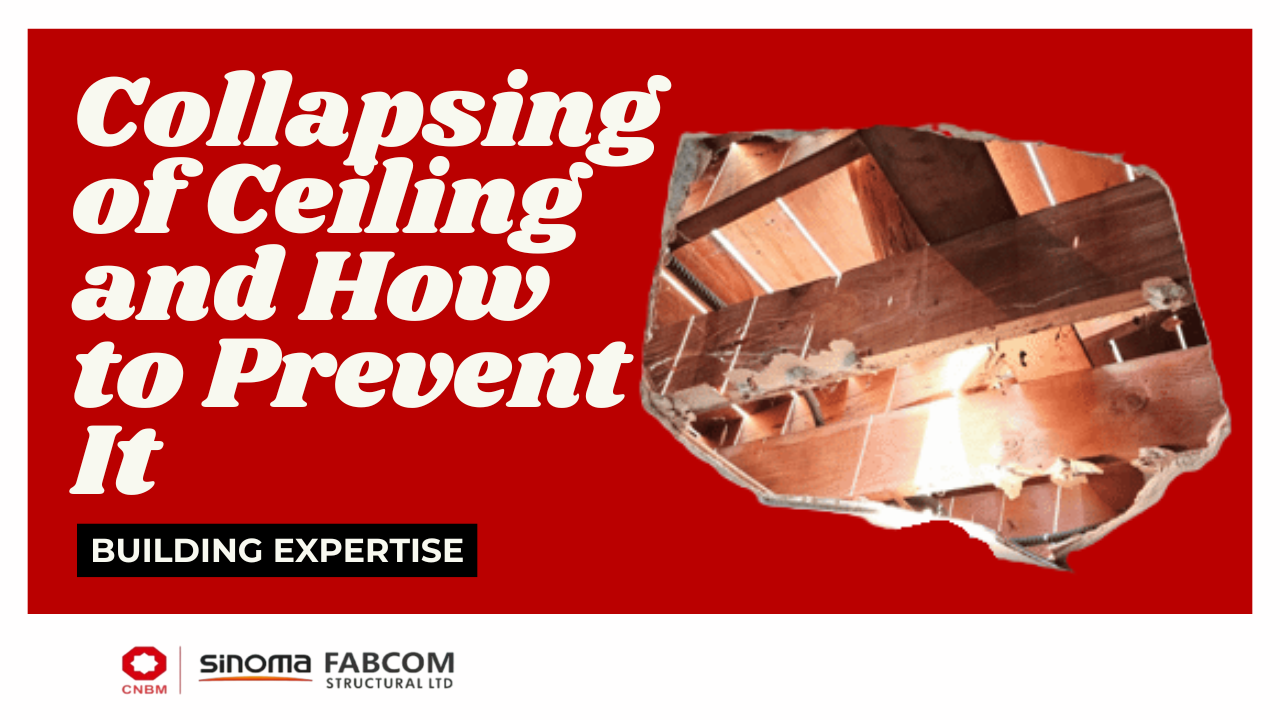
Ceilings collapse is one of those building problems people don’t take seriously until it happens.
In Nigeria, it happens more often than it should. Homes. Offices. Schools. Shops. Sometimes during rainfall. Sometimes quietly, years after completion. Sometimes with people inside the building.
And when it happens, the questions start:
How did this happen? Who is at fault? Was it bad luck?
Most ceiling collapses in Nigeria are not accidents, as they are usually the result of decisions made early, decisions that only show their consequences much later.
Which is why we want to explain why ceilings collapse in Nigeria, based on what builders, suppliers, and homeowners actually see on sites.

Why Ceiling Collapse
Most ceiling collapses in Nigeria are not accidents.
They are the result of decisions made early:
- Wrong material choices
- Poor installation
- Termite infestation
- Short-term cost thinking
- No accountability after handover
This mistake will be expose by the ceilings later.

Weak or Poor Quality Wood Framing
This is one of the biggest reasons ceilings collapse. Many ceilings are supported by untreated or low-grade wood. At the time of installation, everything looks fine. The ceiling is flat. The finishing is clean.
Over time:
- Termites eat into the wood
- Moisture weakens it
- The wood bends or cracks or loses strength
The problem is that this damage happens out of sight. You don’t see it. You don’t hear it. The ceiling may stay intact for years, until one day it gives way as the wood had exhaust it lifespan.
Termite Infestation
Termites don’t announce themselves with noise, due to that they now have the time to reduce wood strength from the inside slowly.
By the time cracks or sagging appear, the wood has already lost its load-bearing ability, and then the ceilings occasionally collapse without warning.
Moisture and Roof Leaks
Even a small roof leak is enough.
Water:
- Weakens wood
- Loosens nails
- Causes boards to swell
Over time, the ceiling becomes heavier while the framing becomes weaker. That imbalance leads to the collapse of the ceiling.
Overloading The Ceiling
Many ceilings fail because they were never designed to carry:
- POP ceilings
- Multiple light fittings
- Ceiling fans
- Decorative panels
The framing was sized for a light ceiling, but the load increased later, while the ceiling will not fail immediately. It failed eventually.
Poor Installation and Shortcuts
This includes:
- Wide spacing between supports
- Wrong fasteners
- Rushed installation
- Guesswork instead of measurement
When framing depends entirely on the installer’s judgment, results vary.
No Maintenance Culture
Once ceilings are installed, most buildings never inspect them again and before a ceiling a collapse it will follow this path
Some of the small warning signs, like sagging, cracks, and unusual sounds, are ignored until failure happens.

How to Prevent Ceiling Collapse in Nigeria
Ceiling collapse is preventable.
The safest approach includes:
- Using termite-resistant framing materials
- Choosing moisture-stable systems
- Designing the ceiling for actual load, not assumptions
- Using precise, consistent framing systems
This is why many builders now move away from wood and use light steel keel framing instead.
Steel does not rot. It does not attract termites. It keeps its strength over time.

Before You Leave
You need to stop not thinking about your ceiling, once it is installed, because this is a roofing materials that sits above eye level, and can slowly disappears from attention. Until the day that it collapse which is what makes ceiling collapsing such a dangerous problem, because of how it is predictable and still ignored.
Some of these small decisions once they are layered on top of each other, can lead to ceilings collapse such as:
- Choosing what was familiar instead of what was durable.
- Saving a little money upfront without thinking about long-term risk.
- Trusting that “it has always been done this way.”
- Assuming that what you can’t see can’t fail.
This is why conversations about ceiling collapse should not start after an incident. They should start at the planning stage, when materials are being selected, loads are being estimated, and long-term performance is still a choice and honestly the environment is not neutral.
Termites are real, and moisture is also real. Heat, humidity, and time all work against weak materials. Pretending otherwise doesn’t make a building stronger and it just delays the consequences.
Here are some of the questions you should start asking early:
- Will this material still be strong in five, ten, or fifteen years?
- What happens if termites get access?
- What happens if there is a roof leak?
- What happens if the ceiling design changes later?
Need a quote for your roof? Chat with our team on WhatsApp to get exact pricing or fill in your information.
Your message has been sent
Our team will contact you shortly within 24 hours with your quote and more information about your roofing needs. Thank you

